



Learning Through Play: How Digital Games Can Make Language Learning More Inclusive
What if learning a new language felt less like a challenge and more like an adventure? For many children, particularly those who experience difficulties with traditional learning methods, digital educational games can offer a different way to engage with language, practise new skills and build confidence. Learning does not look the same for every child. […]
The Hidden Talents in the Language Classroom
How different approaches to learning can help us discover what children are really capable of Imagine a child sitting in a foreign-language classroom, struggling to remember new vocabulary. They are slower than their classmates when completing an exercise, make mistakes when reading aloud, and rarely volunteer an answer. After a while, it can become easy to think that this […]
FOCUS Moves into Its Final Phase: From Project Development to Classroom Testing
The FOCUS project is entering an important stage of its journey, with partners moving from the development and refinement of the project resources towards their practical testing with teachers and children. On 30 June and 1 July 2026, the FOCUS consortium gathered in Patras, Greece, for the project’s final Transnational Project Meeting (TPM). With the […]
When Homework Becomes a Family Affair: What Research Tells Us About Supporting Parents of Children with Learning Difficulties in Foreign Language Learning
For many parents, the moment their child opens a foreign language textbook can quietly become one of the most stressful parts of the day. When a child has a learning difficulty such as dyslexia, this struggle rarely stays confined to the classroom, it follows the family home. Recent research is beginning to map exactly how this happens, […]
FOCUS Project Advances in Perugia: Strengthening Training and Collaboration

From 21 to 24 April 2026, the FOCUS project partners gathered in Perugia for a dynamic week that combined a Transnational Project Meeting (TPM) with a pilot teacher training. This meeting marked a key step forward as the project moves closer to the launch of its Online Training Program and Digital Educational Games. The TPM, held […]
Language and Cultural Identity: The Educational Task That Goes Beyond Grammar Reflections for Foreign Language Teachers in Primary and Lower Secondary School Drawing from the Erasmus+ FOCUS Project
When a child learns to say ciao or bonjour, they are not simply acquiring an alternative communication code. They are opening a window onto a different way of seeing the world, of organising time, of greeting, of laughing, of grieving. Foreign language learning is, from the very first words, a cultural experience. And yet schools still struggle to treat it as such. The European project FOCUS (Foreign Language Teaching for Students with Learning Difficulties, Erasmus+, no. 2023-1-SI01-KA220-SCH-000161979) has a precise aim: to make foreign language learning accessible to all primary school children, including those with learning difficulties. In doing so, however, it […]
Dyscalculia and language learning: overlapping processes and inclusive perspectives

Dyscalculia is often described as a difficulty with mathematics, but this definition does not fully reflect its complexity. As outlined by the European Dyslexia Association, dyscalculia is a specific learning difference that influences how people process numbers, quantities, and relationships. When viewed through a neurodiversity-informed perspective, dyscalculia is a variation in cognitive processing, resulting in a […]
Creating inclusive language classrooms
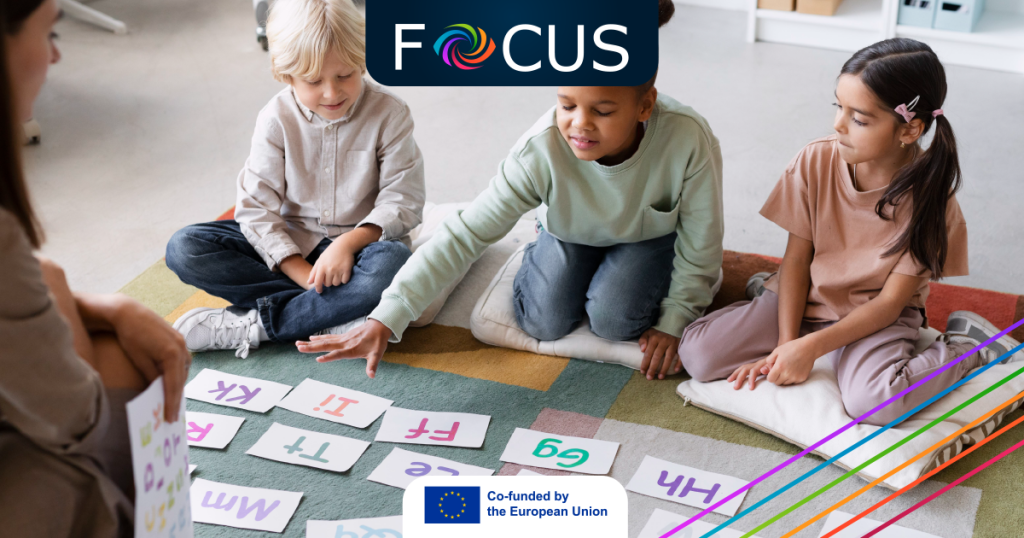
In the landscape of European education, the Erasmus+ FOCUS project (Foreign Language Learning Opportunities for Children with Learning Difficulties) is aimed at fostering inclusive and supportive foreign language learning environments for children aged 6 to 12. Yet the insights, tools, and methodologies emerging from this project carry significant relevance well beyond school walls, offering valuable lessons for adult education […]
Supporting Dyslexic Learners: A Comparative Analysis of Two Educational Initiatives
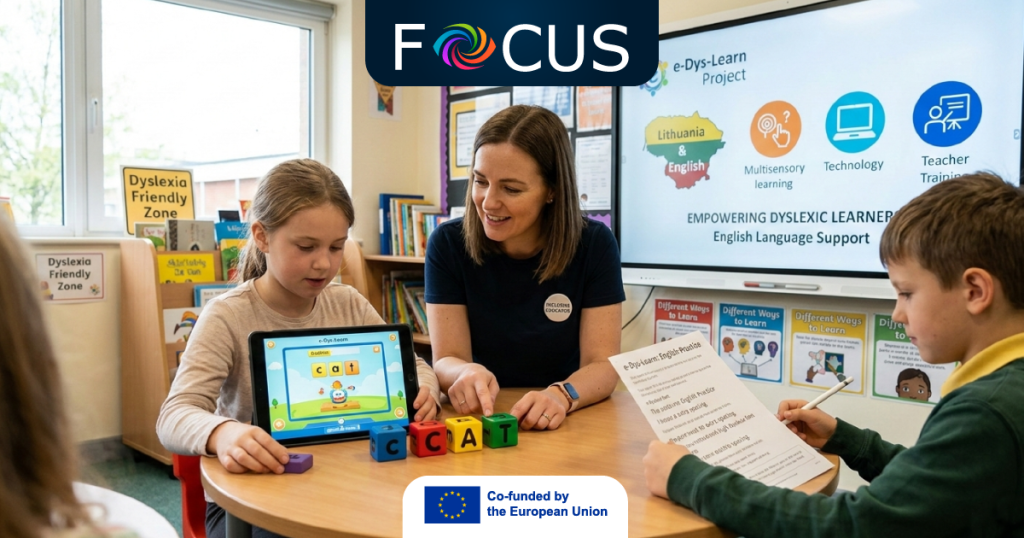
Dyslexia is a common learning difficulty that affects reading, writing, and spelling, often creating additional challenges when students learn a foreign language. Educational initiatives increasingly focus on developing inclusive teaching strategies and preparing teachers to support learners with dyslexia. This article compares two initiatives: the Lithuanian study on teaching English to dyslexic pupils and the […]
Artificial Intelligence in Foreign Language Teaching for Children with Learning Difficulties

Teaching a foreign language to children with learning difficulties is both a demanding and highly rewarding task. In a classroom we can find different learning paces, diverse ways of understanding and remembering, and very specific needs that require flexibility, patience, and creativity from teachers. In recent years, artificial intelligence (AI) has begun to open up […]
