



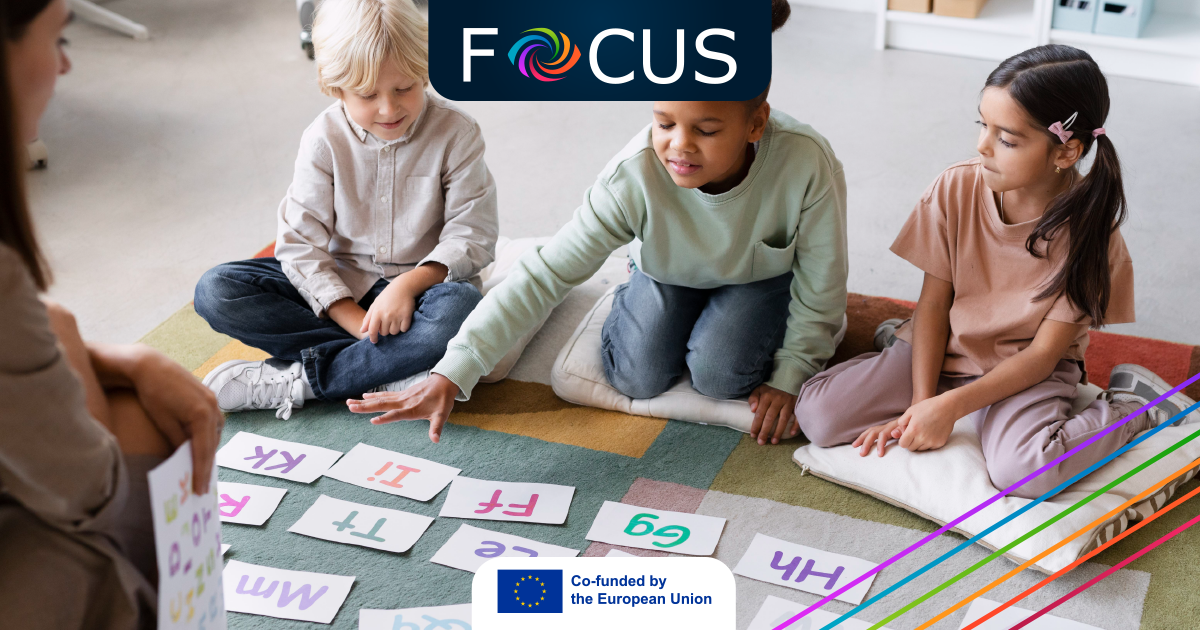
In the landscape of European education, the Erasmus+ FOCUS project (Foreign Language Learning Opportunities for Children with Learning Difficulties) is aimed at fostering inclusive and supportive foreign language learning environments for children aged 6 to 12. Yet the insights, tools, and methodologies emerging from this project carry significant relevance well beyond school walls, offering valuable lessons for adult education practitioners working with learners who face similar challenges in language acquisition.
About the project
Funded under the Erasmus+ programme and led by a consortium of partners from six European countries (Slovenia, Greece, Cyprus, Lithuania, Italy and Spain), the FOCUS project empowers educators through innovative, research-based tools and methodologies designed specifically for inclusive foreign language teaching.
The mission of the project is twofold:
- To equip teachers with effective strategies, tools and professional development opportunities to teach foreign languages to children with diverse learning needs.
- To create engaging and accessible learning environments that promote participation, motivation, and success for every learner, regardless of their challenges.
While the primary focus is on young learners, adult educators will recognise these goals as universal. Adults with dyslexia, hearing impairments, language processing difficulties, or low literacy often face structurally similar barriers when learning a foreign language and benefit from many of the same inclusive approaches.
One of the project’s first tangible results is the launch of the “FOCUS in Practice” Digital Database – a comprehensive online repository filled with best practices, case studies, and interviews with professionals working in foreign language education and special needs education.
This free, open-access resource is available on the official project website and serves as a powerful tool for teachers, speech therapists, educational support staff, and policymakers looking to enhance inclusive teaching in multilingual contexts. Adult education practitioners – from language trainers working with migrants and refugees to vocational educators supporting learners with additional needs – will find directly transferable insights across the database.
Highlights from the Digital Database
Best Practices (https://focus-project.eu/best-practices/)
The “Best Practices” section provides a rich array of approaches that can be implemented in foreign language classrooms. These practices are categorised across key themes such as:
- Vocabulary development and reading fluency
- Spoken language and grammar exercises
- Use of assistive technology and multi-sensory methods
- Classroom management and motivation
- Attention to cultural background and behavioural patterns
- Tools tailored for learners with dyslexia or hearing impairments
Examples of resources include Mind Mapping for Vocabulary Learning, Storytelling Approaches for Students with Learning Disabilities, Multisensory Language Games, Digital English Task Banks for Dyslexic Learners, and Speech and Language Strategies from Specialist Guides. Each entry includes detailed descriptions of the method, its benefits, and practical implementation steps.
For adult educators, these methods translate naturally into contexts such as integration language courses, workplace language training, and second-chance education programmes, where learners frequently bring undiagnosed or undisclosed learning difficulties alongside complex life experiences.
Case Studies (https://focus-project.eu/case-studies/)
The Case Studies section brings theory to life through real stories from classrooms in the six partner countries. These narratives describe how teachers adapted their lessons to support students with specific challenges – from dyslexia and language delay to autism and speech-language impairments.
Some highlights include the use of story cubes and flashcards to support children with expressive language disorders, theatre-based learning to build confidence and oral skills in a student with autism, gamified vocabulary apps to engage students with attention difficulties, and peer-to-peer teaching methods to encourage social inclusion among diverse learners.
Adult educators working in non-formal or community learning settings will find the reflective, learner-centred approach of these case studies particularly resonant. The pedagogical principles underpinning them – differentiation, scaffolding, and building on learner strengths – are cornerstones of quality adult learning practice as defined by the European Agenda for Adult Learning.
Interviews (https://focus-project.eu/interviews/)
The Interviews section features conversations with educators, speech therapists, and occupational therapists. Their reflections reveal both the challenges and the joy of creating inclusive foreign language learning environments. Topics include building trust and motivation in students with low self-esteem, the role of classroom routines in supporting learners with executive function challenges, strategies for engaging families in the language learning process, and tailoring expectations and celebrating small wins.
Many of these themes – particularly around motivation, self-confidence, and the emotional dimension of language learning – are equally central to adult education, where learners may carry years of negative educational experiences and require a trauma-informed, person-centred approach.
Empowering educators across sectors
The “FOCUS in Practice” Digital Database is more than just a collection of materials – it is a growing community of shared knowledge that speaks to educators across the full learning continuum. It empowers practitioners to recognise and respond to individual learner needs, apply practical strategies backed by real-life experiences, and foster environments where every learner can succeed – whether that learner is a six-year-old navigating their first foreign language or an adult returnee re-entering education after years away.
Why it matters – for all of us
Inclusive education is not just about meeting legal obligations – it is about embracing the diversity of learners and giving each person the chance to thrive. In adult education, this imperative is especially pressing: learners with learning difficulties are disproportionately represented among those with low qualifications, and language barriers frequently compound social and economic exclusion.
The FOCUS database contributes to bridging this gap by helping break down language learning barriers for learners with learning difficulties across age groups, supporting educators in planning differentiated and adaptive lessons, and fostering a culture of continuous professional development and intercultural exchange – values at the heart of EPALE’s mission.
Next steps in the FOCUS Project
As the project evolves, new resources are in the final development stage: a professional online training course for teachers, game-based learning materials for language acquisition, and customisable teaching toolkits tailored to specific learning difficulties. These outputs will be of direct interest to adult education practitioners seeking evidence-based, accessible tools for inclusive language teaching.
Explore the FOCUS in Practice database and more at:
https://focus-project.eu/database
Join the conversation on inclusive language education – and be part of the change across all sectors of learning!